Neo-Serfdom and Modern Borders
Neo-serfdom shows how borders limit migration, trap workers, and sustain inequality. This creates modern control without needing legal ownership.

Abstract
Neo-serfdom shows how borders limit migration, trap workers, and sustain inequality. This creates modern control without needing legal ownership.
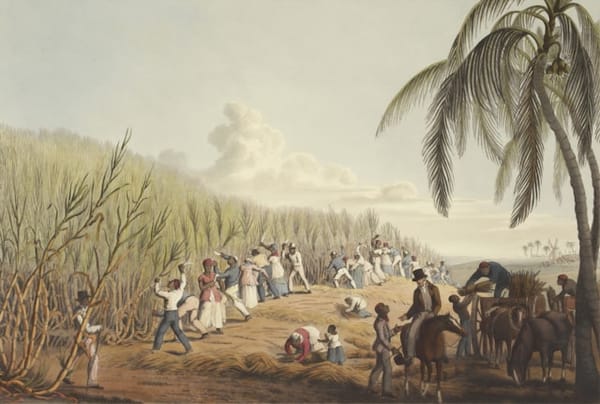
During medieval Europe, almost everyone was a serf. They were not considered enslaved people, but they lacked genuine freedom as well. Serfs worked the land that a lord owned and remained tied to it, unable to leave without permission. Where they were born, and their lord controlled and shaped their lives. Today, serfdom no longer exists in law. Yet many people are noticing similarities in today's world. They are calling this version Neo-serfdom. Neo-serfdom shows how borders and migration rules limit workers today.
Neo-serfdom means people are free on paper. Yet, escaping it comes with many tough challenges. They can work, earn money, and, in some cases, vote. Yet, systems they cannot control limit their ability to move, change jobs, or improve their lives. The new national borders bear a strong resemblance to the conditions of serfdom. Where you are born often determines your income, where you can live, and what legal rights you have. As in medieval Europe, birthplace becomes a powerful form of control.
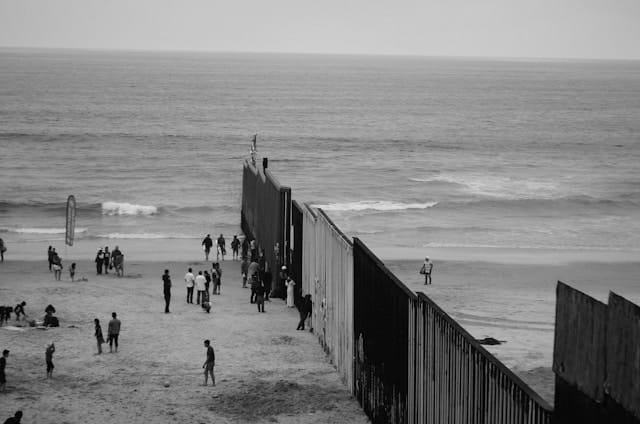
Borders restrict movement, significantly affecting workers. Even if companies need workers, a poor person born in a poor country has few options to move to a richer one. Limited visas are hard to get, expensive, and often tied to an employer. If a worker loses that job, they may lose the right to stay in the country. This makes it risky to complain about low pay or unsafe conditions. Fear replaces chains, but the effect is similar.
In medieval times, serfs were de facto attached to the land. The lord would promise safety from violence and starvation. In return, serfs gave the lords their labor and loyalty. In today's world, governments provide the same promise that lords gave. People say that borders protect jobs, culture, and security. In exchange, people accept limits on their movement and where they can work. This promise of protection sounds appealing, but it primarily serves the interests of those in power rather than those of workers.
Today’s world shows another serf-like trait: people can be punished for trying to leave or enter another nation. Authorities could jail and/or punish serfs who ran away. Even documented migrants can face harsh punishment if they sneeze the wrong way or get laid off.
In the modern world, capital is freer than people. Oligarchs can shift factories, investments, and profits across borders with ease. Workers are not given the same freedom. This creates an unfair balance. Employers can search the world for cheaper labor or fewer accountability laws. At the same time, workers must compete with one another within fixed borders. This weakens workers’ bargaining power and keeps wages low. Welfare ultranationalism says that workers in modern nations can have their rights and benefits limited to those of their own country.
In contrast, others exclude themselves, echoing how serfs once tied themselves to the land. Nationalist policies support this system. They focus on justifying benefits for native-born citizens. Focusing on national identity encourages people to see migrants as outsiders or threats. Those at the top promote this narrative through propaganda. This divides workers who might otherwise support each other. Instead of blaming powerful employers for low wages, people direct their anger at those with even less power. Division helps maintain control.
Neo-serfdom and nationalism are not the same as medieval life, but they share many similarities. Control does not require direct ownership, but external factors can still influence it. When restrictions limit movement and punish exit, they limit freedom. Neo-serfdom helps us see that freedom is not about laws on paper; it is about the land's systems and processes that maintain control.
References
- https://www.sciencedirect.com/science/article/pii/S0962629822000129
- https://www.cambridge.org/core/journals/slavic-review/article/abs/neoserfdom-its-origin-and-nature-in-east-central-europe/0FF83D9EC2C03B495265088BF2302C49
- https://www.sciencedirect.com/science/article/abs/pii/S0927537117301951
- https://economics.princeton.edu/working-papers/the-effects-of-immigration-on-the-economy-lessons-from-the-1920s-border-closure/
- https://www.cambridge.org/core/services/aop-cambridge-core/content/view/A8A22A8BE6D56094E344A14686ECF416/S103530462300056Xa.pdf/div-class-title-proposing-mobility-visas-as-an-alternative-to-employer-sponsorship-addressing-inequalities-in-the-treatment-of-temporary-migrant-workers-div.pdf
- https://pmc.ncbi.nlm.nih.gov/articles/PMC8315259/
- https://en.wikipedia.org/wiki/LaborMovement:HowMigrationRegulatesLaborMarkets
- https://www.sciencedirect.com/science/chapter/handbook/abs/pii/B978044453764500013X
- https://www.iza.org/publications/dp/3560/migration-the-quality-of-the-labour-force-and-economic-inequality
- https://www.sciencedirect.com/science/article/abs/pii/S0167718723000863
- https://researchportal.hkust.edu.hk/en/publications/the-welfare-is-ours-rural-to-urban-migration-and-domestic-welfare/
- https://academic.oup.com/policyandsociety/advance-article/doi/10.1093/polsoc/puaf027/8304391
Buy me a coffee at:
https://buymeacoffee.com/clubtj
Visit my blog at:
https://www.quarkstochlorophyll.blog
© 2025 Tim Jackson. All Rights Reserved.