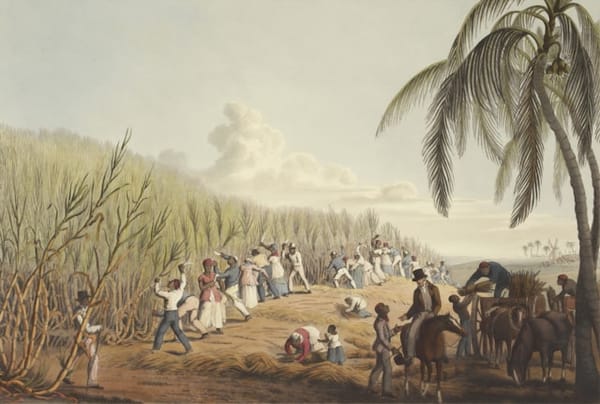
We must always check power, and those who abuse it must face justice.
Unchecked power, in both capitalism and communism, leads to abuse. The solution is not an economic extreme, but a legal system in which no one is above the law, and all rulers face justice.

Abstract
Unchecked power, in both capitalism and communism, leads to abuse. The solution is not an economic extreme, but a legal system in which no one is above the law, and all rulers face justice.
Throughout history, people have sought a better way to organize society. The two most famous ideas are capitalism and communism. Both systems have failed in practice for the same reason: they permit those in power to abuse others. The real solution is not to focus on an economic extreme, but to build a system in which no entity is above the law. The core principle must be this: we must always check power, and those who abuse it must face justice.
Definition of systems
Capitalism is an economic system where individuals own property and businesses. The government doesn’t control trade or industry. Buyers and sellers are expected to independently manage the market.
Communism is a system where the government owns all property and controls the economy. Its goal is to create a classless society.
The Shared Flaw
Although these systems appear to be opposites, they share a critical flaw: both failed to control their powerful elites.
In capitalism, power gathers in the hands of the very rich: the “economic rulers.” Without rules, these rulers form monopolies, exploit workers, and buy political influence.
In historical communist states, a single political party and the state itself gathered power. This created a class of “political rulers” who controlled every part of life, leading to widespread oppression.
The Real Problem
Thus, it is not about choosing the right economic theory. It is about the nature of power itself. Unchecked power, whether in a boardroom or a government office, corrupts. The goal is to create a system in which power is always constrained. Those in power must follow the same laws as everyone else.
A Possible Solution
What we need is a liberal democratic constitutional state. This is a system built on three key ideas:
- Liberal: The system’s most important job is to protect each person’s rights and liberties against abuse from any powerful group, including the government itself
- Democratic: Leaders are chosen in free and fair elections, giving the people the power to easily replace them; this is how citizens hold rulers accountable
- Constitutional: The government’s powers and limits are written in a supreme law, a constitution, that everyone from the president to the police chief must follow
This system does not assume our leaders will be angels. It assumes they could be corrupt. Thus, it “chains” them through laws, courts, a free press, and the separate branches of government that check one another. This creates clear restrictions on power.
The Most Important Rule
If the powerful break these legal restrictions, they must face punishment. No excuse, not national security, not economic crisis, can justify breaking the law. The punishment must fit the crime and the authority of their office. A higher position commands greater public trust, so violating that trust deserves a stronger penalty.
Creating such a system is difficult. It requires strong, independent courts unafraid to judge the powerful. It needs a free press that can investigate and expose corruption without fear. It depends on an educated public that values its rights and participates in democracy. Above all, it needs a culture that believes in the rule of law for everyone.
Conclusion
The true debate is not between capitalism and communism. The debate is between a society ruled by powerful individuals and a society ruled by fair laws. Both capitalism and communism, in their pure forms, fail because they lead to the first. The durable answer is to commit to the second: a system designed to limit power, in which leaders are held accountable, and the law protects the weakest from the strongest.
May we find a way to build such a society for everyone.
References:
- https://www.britannica.com/topic/liberal-democracy
- https://en.wikipedia.org/wiki/OnLiberty
- https://academic.oup.com/edited-volume/28275/chapter-abstract/213425010?redirectedFrom=fulltext
- https://www.mspb.gov/msp/msp4.htm
- https://nij.ojp.gov/library/publications/police-accountability-current-issues-and-research-needs
- https://plato.stanford.edu/archIves/win2016/entries/rule-of-law/
Buy me a coffee at:
https://buymeacoffee.com/clubtj
Visit my blog at:
https://www.quarkstochlorophyll.blog
© 2025 Tim Jackson. All Rights Reserved.