Why Do Countries Colonize Other Territories?
Colonization aims for economic control. It does this by managing resources, labor, trade, and financial power. It also limits rival nations' strategic options.

Abstract
Colonization aims for economic control. It does this by managing resources, labor, trade, and financial power. It also limits rival nations' strategic options.
Throughout history, powerful nations have seized control of other lands to expand their influence. Colonization isn't about taking land. It focuses on controlling economies and shaping the future of other societies. Stronger countries often try to control resources, labor, trade, money, and key routes. They used direct rule in the past and economic pressure today. Colonization, both in the past and today, is about gaining power. It does this by restricting the independence and growth of other nations.
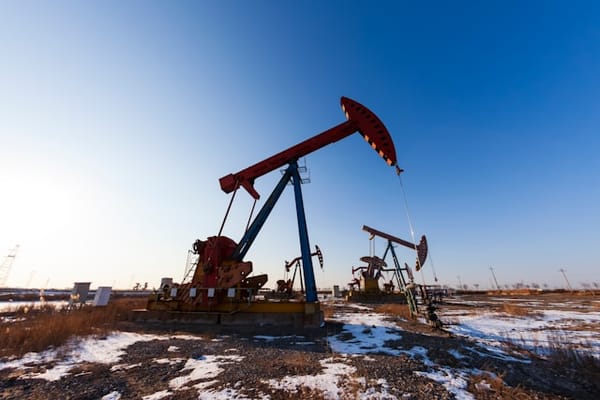
One of the most important reasons for colonization is access to natural resources. Many colonies were rich in valuable materials, including gold, silver, spices, rubber, cotton, and oil. The Spanish Empire took large amounts of silver from the Americas. This led to a big boost in Spain’s wealth. Later, European powers took rubber from Africa and spices from Southeast Asia to fuel their industries. In the modern world, oil has become one of the most important resources. After the 2003 Iraq War, foreign oil companies such as ExxonMobil and BP signed major contracts to develop Iraqi oil fields. Iraq isn't a colony, but critics say powerful nations can still influence it. They shape who controls valuable resources. In Nigeria's Niger Delta, foreign oil companies have gained wealth. Meanwhile, local communities suffer from environmental damage. These examples show that control over resources continues to shape global power relations.
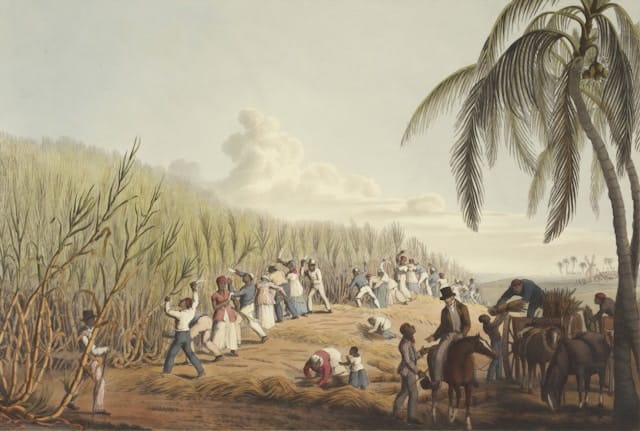
Another major motive for colonization is access to cheap labor. Colonizing nations often forced local populations to work in mines, farms, and plantations for little or no pay. Enslaved labor in the Americas and forced labor in the Congo are clear examples. Cheap labor lowered costs and increased profits for the colonizing country. Colonial governments imposed restrictions on local industry to prevent competition. Under British rule in India, local textile makers faced high taxes. Meanwhile, sellers offered British-made cloth at low prices in Indian markets. This weakened India’s manufacturing sector and pushed workers into lower-paying agricultural labor. Colonial powers blocked industrial development. This kept colonies as dependent suppliers of raw materials. They remained weak rather than becoming industrial rivals.
Colonization was also closely linked to the goal of creating trade surpluses. In the mercantilist era, European countries thought that being strong meant exporting more than importing. Colonies supplied raw materials and had to buy finished goods from the mother country. Colonies faced limited economic choices due to restrictions on trading with other nations. They bought raw materials at low prices while selling finished goods at higher prices. This unfair trade system often led to trade deficits in the colony. Because of this, the colony had to borrow money or depend on credit managed by the colonizer. Over time, debt and dependency made it difficult for colonies to build independent economies.
Control over banking and financial systems also played a key role. Colonial governments often controlled currency, taxation, and credit in their territories. If a colony does not control its own money supply, it cannot effectively manage its economy. A country with a sovereign currency can lower interest rates during a recession or increase spending to boost job creation. Without that control, policymakers limit economic policy. A modern example is the CFA franc system used by several West African nations, in which they have long tied their monetary policy to France. Critics say this limits those countries' ability to handle economic crises on their own. Financial control can shape a nation’s future with the same intensity as military power.
Another important motive is the control of trade routes. Key locations link major markets. They help countries transport goods quickly and securely. In the past, Britain controlled the Suez Canal, and the Panama Canal became another vital shortcut for global trade. Today, trade routes remain central to global competition. China’s Belt and Road Initiative aims to create ports, railways, and highways. It connects Asia, Africa, and Europe, boosting trade. Some countries view this as an effort to increase China’s global influence. The U.S. and European nations have started rival infrastructure programs. Meanwhile, India has rejected routes that go through disputed areas. This shows that countries still compete to build or block trade networks to protect their economic interests.
Finally, nations often act to limit the growth of competing powers. During the “Scramble for Africa,” European countries claimed land partly to prevent rivals from gaining it. In the modern world, economic pressure is more common than direct colonization. Export controls on advanced semiconductor tech aim to slow China's growth in high-tech fields. Sanctions on Russia limit access to global finance and technology. This affects both industrial and military growth. Supporters argue these actions are necessary for national security. Critics say these strategies look like old colonial ones. They limited industrial growth in dependent areas. Even without formal colonies, powerful nations still shape others' economic paths.
In conclusion, the desire for power—especially economic power—has always driven colonization. Stronger nations shape weaker ones by controlling resources, labor, trade, finance, and routes. Modern strategies usually focus on economic influence rather than direct rule. Still, the goal is the same: to gain an edge and reduce competition. Understanding these motives helps explain both past empires and today's global tensions.
Reference
- https://www.sciencedirect.com/science/article/pii/S001449832100019X?via%3Dihub
- https://link.springer.com/article/10.1007/s11356-016-6864-1
- https://drpress.org/ojs/index.php/ajmss/article/view/13169
- https://www.economicsdiscussion.net/mercantilism/mercantilism-concept-factors-and-characteristics/20980
- https://fatshimetrie.org/en/international/2024/11/30/the-cfa-franc-between-monetary-stability-and-economic-dependence/
- https://www.history.com/articles/suez-canal
- https://www.britannica.com/topic/Belt-and-Road-Initiative
- https://www.britannica.com/event/Scramble-for-Africa
- https://en.wikipedia.org/wiki/De-industrialisationofIndia
- https://openstax.org/books/world-history-volume-2/pages/5-3-the-mercantilist-economy
- https://www.imf.org/en/publications/wp/issues/2016/12/30/the-cfa-franc-zone-currency-union-and-monetary-standard-1009
- https://www.weforum.org/stories/2023/11/china-belt-road-initiative-trade-bri-silk-road/
- https://www.axios.com/2022/10/07/semiconductor-exports-china-biden-administration
Buy me a coffee at
https://buymeacoffee.com/clubtj
Visit my blog at
https://www.quarkstochlorophyll.blog
© 2025 Tim Jackson. All Rights Reserved.